
AI Strategy and Leadership Advisory
AI for Law Firm Leaders and Rainmakers
Clients expect sharper insight and faster responses than they did even a few years ago. Competitors are changing how they prepare and present. For managing partners, practice heads and senior lawyers, the question is no longer whether AI matters, it is how to apply it without undermining judgement or credibility.
I work with law firm leaders to strengthen how they win and retain work, with AI applied deliberately and within clearly defined boundaries.
Ways We Can Work Together
Leadership and Practice Group Sessions
Focused working sessions that examine where AI can improve preparation, consistency and follow-through across the group, and what guardrails are needed to protect standards and confidentiality.
Individual Partner Advisory
Firm-Wide AI Strategy
What I See in Practice
- Partners are experimenting individually but there is no shared standard across the group
- Preparation for pitches and client meetings is still more instinct-driven than it needs to be
- Junior lawyers are using AI in ways that seniors haven't agreed or sanctioned
- Thought leadership and visibility are inconsistent, some partners active, most not
- AI is being treated as a technology question when it is really a business development question
- Firms are moving fast on tools and slowly on governance
The opportunity is not efficiency. It is better preparation, stronger positioning and more consistent follow-through.
How I Help
AI for Smarter Client Strategy
I work with leadership teams and practice groups to apply AI in ways that strengthen client strategy and business development.
A Typical Progression
01
Alignment — understanding where AI adds value and where it does not
02
Application — embedding it into BD workflows and pitch preparation
03
Governance — ensuring standards, confidentiality and oversight are in place
What Clients Say
“In one workshop, we worked on improving preparation for strategic client meetings by integrating structured AI-assisted research with partner insight. The result was not simply faster preparation, but more focused conversations and clearer follow-up actions across the team.”
Partner,
UK Law Firm
Questions people ask
How can AI actually help a lawyer win more work?
AI helps you prepare better, think more clearly about clients, and follow through with more discipline. It is not about drafting legal documents. Used well, it sharpens your preparation for pitches and client meetings, helps you spot patterns across a relationship, and takes the friction out of the business development habits most fee earners struggle to keep up. The relationship still depends on you. AI just makes the work around it easier to sustain.
Is this about using AI for legal drafting?
No. This service is about business development and client strategy, not legal work product. There are plenty of tools and providers focused on drafting, research and document review. My focus is the commercial side: how you find work, win it, and grow the relationships that matter. That distinction is deliberate, because the business questions are where most lawyers get the least support.
What is an example of using AI in business development?
A common example is preparing for a pitch or a client meeting. AI can help you pull together what you know about the client, sharpen your questions, pressure-test you proposal and draft clear follow-up, all in a fraction of the usual time. Other examples include preparing for a directory interview, planning how to grow a key relationship, or keeping in touch with targets in a consistent way. The point is always better preparation and follow through, not automation of the relationship.
I’m not technical. Do I need to understand AI to benefit?
No. You do not need any technical background. The work starts from your practice and your clients, not from the technology. I show you how to use AI in ways that fit how you already work, using plain examples tied to real business development situations. Most of the lawyers I work with are busy senior professionals who want practical results, not a lesson in how the tools are built.
Will AI replace the relationship side of business development?
No. Relationships remain the decisive factor, and AI does not change that. Clients still instruct people they trust. What AI does is give you more time and better preparation for the human part, by handling the groundwork that usually gets squeezed out by billable work. The firms and individuals who do well with AI are the ones who use it to strengthen relationships, not to replace them.
How is this different from generic AI training?
Generic training teaches you how the tools work. This starts from how you win work. The difference is context: I have spent more than 25 years in legal marketing and business development, so the examples, prompts and habits are built around how law firms actually generate work and how clients actually buy. You leave with something you can use on your next pitch, not a general overview you have to translate yourself.
How do you handle client confidentiality and risk?
Confidentiality and risk sit at the centre of how I work, not as an afterthought. We look at what can and cannot go into a tool, how to use AI without exposing client information, and how to stay within your firm’s policies and professional obligations. The aim is to build confidence and good judgement, so you know where the lines are and can use AI in a way that stands up to scrutiny.
Can you work within our firm’s AI policy and approved tools?
Yes. Working within your firm’s policies and approved tools is the starting point, not a constraint to get around. If your firm has set rules on which tools can be used and what information can go into them, we build the work around those. If your firm is still forming its position, I can help you use AI sensibly in the meantime and feed practical experience back to whoever sets the policy.
Which AI tools do you use or recommend?
The approach is not tied to one tool. Most of the work can be done with the mainstream tools your firm is likely to allow, such as ChatGPT, Claude or Copilot, and I focus on how to use them well rather than on the tool itself. If your firm has approved or provided particular tools, we work within those. The skills and judgement you build carry across tools as they change.
Do you work with Microsoft Copilot, since that is what our firm has given us?
Yes. Copilot is what most lawyers now have a licence for, so it is a natural focus and often where we start. I show you how to get real business development value from Copilot, using it inside your firm’s Microsoft environment and its permissions. I am also tool agnostic, so if you have access to ChatGPT or Claude, or want to use them, I can train you in those too. The skills and judgement you build carry across whichever tool you end up using.
What does an engagement look like?
Engagements are built around your practice and your diary. They can run one to one or as a small group, as a single focused session or a short series, so the work fits alongside a full caseload. We start from your real business development situations, such as an upcoming pitch, a key client or a target you want to convert, and work through how AI can strengthen your preparation and follow through. You leave with prompts and habits you can keep using.
How much time do I need to put in?
Less than most people expect. The point is to fit AI into how you already work, not to add another task to your week. The initial work is a focused session or short series, and after that the habits are designed to save you time rather than cost it. Most lawyers find that once the tools are set up around their own clients and pitches, using them takes minutes and returns more than it takes.
What results can I expect?
Most people leave better prepared, more confident with the tools, and clearer about how to apply them to their own clients and targets. The practical gains tend to be stronger pitch and meeting preparation, more consistent follow up, and time saved on the groundwork around business development. The bigger outcome is a habit you can sustain, so the improvement continues after our work together rather than fading once the session ends.
Who is this service for?
It is for partners, senior fee-earners and rainmakers who carry responsibility for winning and growing work. It suits people who want to be more deliberate about business development and are open to using AI to do it better, whether or not they have used the tools before. It works one to one and in small groups, and it can be tailored to a practice group or an individual’s client base.
Can this be delivered to a whole practice group or team?
Yes. As well as one to one work, this can be delivered to a practice group, a partner and their team, or a group of fee-earners who want to develop together. Working as a group builds a shared approach and makes it easier to keep the habits going, because people can compare notes and hold each other to it. The content is tailored to the group’s clients and the kind of work they are chasing.
Do you also give talks or run workshops on this?
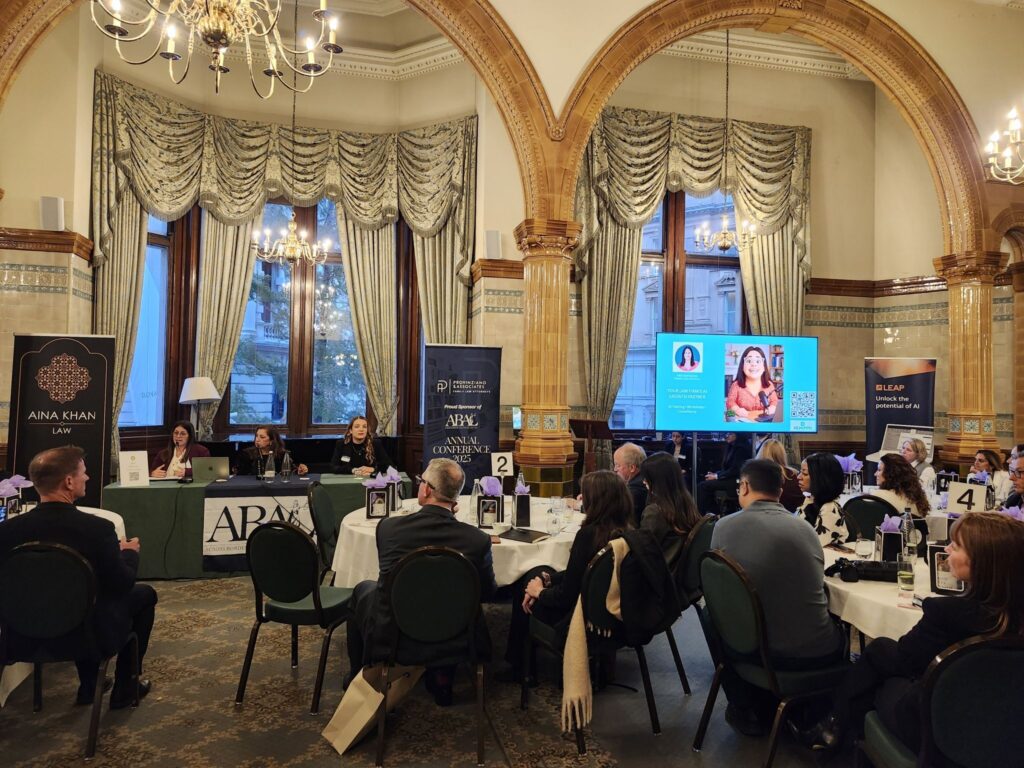
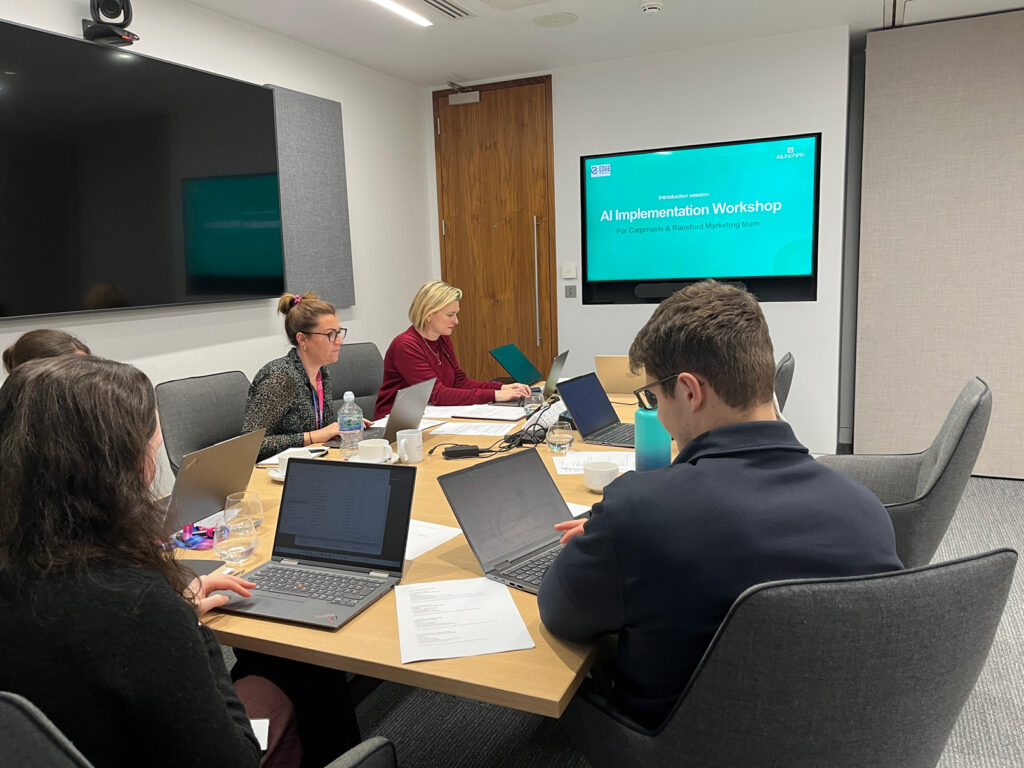
Yes. Alongside one to one and small group work, I speak and run workshops for firms and legal audiences on AI for business development and client strategy. A talk or workshop is often a good way to introduce the ideas to a wider group before deciding where to go deeper. If you are looking for a keynote or session for an event, team day or partner retreat, that can be arranged.
How do I get started?
Getting started is a short conversation about your practice, your clients and what you want to improve. From there we agree the right format, whether that is a one to one session, a small group or a workshop, and what to focus on first. There is no need to prepare anything technical. The easiest first step is to get in touch and tell me what you are trying to achieve.